“I’d love to go to the symphony sometime, but I don’t know anything about classical music.”
We understand where that feeling comes from. Classical music can feel like it comes with a surprising amount of homework. There might be composers with names you may or may not recognize, pieces with titles in other languages, program notes full of history, and an entire vocabulary that can make attending a concert feel like something you’re supposed to understand before you walk through the door. And worse, maybe like someone never gave you the reading materials before the test.
We want to promise you that this is NOT the case, and nobody will be handing out a quiz at intermission.
A symphony concert can be a lot of things—and often different things to different people. You may get completely wrapped up in a melody, spend five minutes watching the percussion section, or find that a quiet moment catches you off guard. You might even hear a piece and decide it’s really not your thing. All of those are perfectly interesting and great places to start.
Knowing more about the music can add layers to the experience, and if something catches your attention, there’s a rabbit hole waiting for you. But you don’t need the vocabulary before curiosity.
So, What Should I Listen For?
Anything that makes you curious is the best place to start.
If we’ve lost you, we’ll explain. Sometimes a piece of music gives you something to follow, perhaps a melody trails off, a specific instrument catches your attention, or the mood shifts mid-song in a way that hits you in the soul. We’re talking about something that jumps out at you and makes you wonder what it was.
This, as it happens, is also one of the best reasons to see an orchestra live. There can be a lot happening onstage, but you don’t have to absorb all of it at once, and you’re not expected to. Your attention can wander.
Over time, you may start putting names to some of what you’re hearing. That can be fun, especially when learning a little bit of vocabulary suddenly gives you a way to describe something you’ve been noticing. But that part that started earlier? That spark of curiosity? That’s the something in the music that made you want to keep listening.
What If I Want to Know More?
One of the best things about classical music is how much you can discover once something really catches your interest.
Knowing the history behind a piece changes the way you hear it. That’s part of why we include program notes at our concerts. They offer context about the music and the people who created it. Even if it’s a piece you’ve heard hundreds of times, that context can give you something new to notice when the orchestra begins to play.
The learning doesn’t have to happen before you hear the music. It can be even more fun the other way around. If a moment catches your attention during the concert, you might go looking for the story behind it later, and suddenly you have a reason to listen again.
What If I Just… Don’t Like It?
You might not, and nobody expects you to like everything.
Music is personal, and walking into a concert hall doesn’t suddenly change that. There will probably be pieces you love, pieces you end up curious about, and eventually something might leave you wondering how everyone around you seems to be having a completely different experience. You never have to talk yourself into liking something just because an orchestra is playing it.
What can be interesting is figuring out what you mean when you say, I didn’t like that.
Was there something about the piece that bothered you? You might not even be able to explain your reaction yet. But now you have an opinion, and opinions are a pretty great place to start.
That’s also quite different from deciding you don’t like classical music.
Classical music spans centuries, and the category is enormous. Hearing one piece and deciding how you feel about all of classical music would be a little like reading one novel and deciding how you feel about books.
Context can make music more interesting. If you understand what a composer was trying to do, sometimes that knowledge completely changes your thoughts on a piece. But you can understand the idea, recognize what the music is doing, and still decide you don’t particularly want to hear it again.
Then There’s Hearing It Live
There’s something about hearing an orchestra live that a recording, no matter how good, will never be able to reproduce.
Some of that difference is completely literal. Sound is vibration, and when you’re sitting in a concert hall with an orchestra, your body is in the room with those vibrations so you can feel the low frequencies of the basses and percussion.
That physical experience is part of what makes live music so unique, but there’s something else happening at the same time: you’re sharing it. The audience responds around you, and everyone’s attention is in the same place. The musicians respond to one another, the conductor shapes the performance as it happens, and the audience is right there for all of it.
It’s also temporary. The same orchestra can play the same piece again, but that exact performance belonged to that particular room, on that particular night, with the people who were there for it.
Enjoy the Process of Discovering
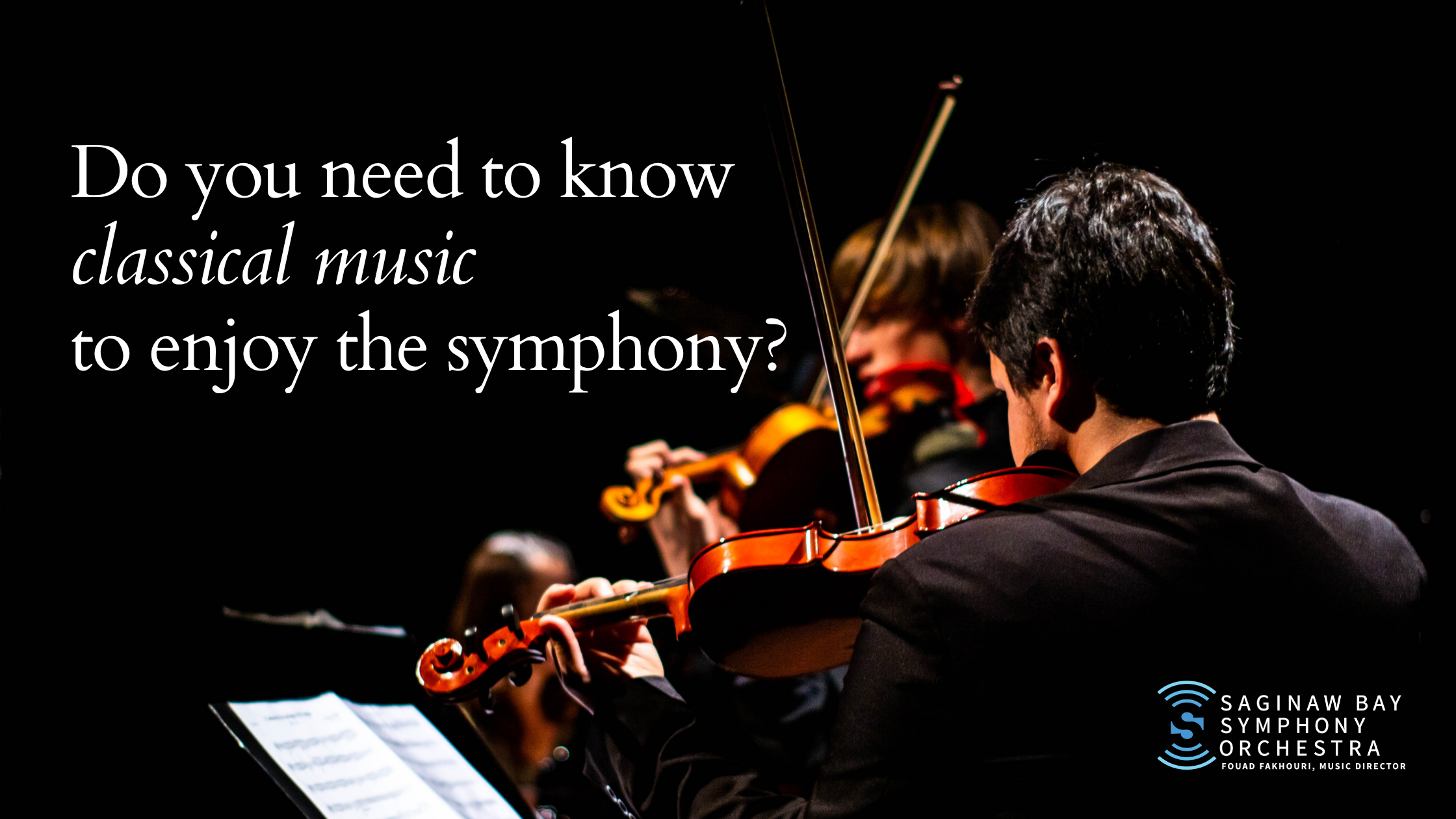
So, do you need to know classical music to enjoy the symphony?
No. But we hope you leave wanting to know something you didn’t before. Curiosity has been the thread running through all of this because there really isn’t a better place to begin.
Take a look at the Saginaw Bay Symphony Orchestra concert calendar, find a performance that sounds interesting, and enjoy the process of discovering.